Schedule an Appointment
Schedule an Appointment
**Requested time is not final until you receive confirmation from our office. Please do not submit any Protected Health Information (PHI).


When it comes to straightening misaligned teeth as an adult, efficiency and discretion often top the list of patient concerns. If you’ve been debating between Invisalign and traditional braces, you’re likely wondering which treatment is faster. How can you get a straighter smile more quickly?
The answer lies in understanding how each treatment works and what factors influence the speed of your results. At Smile With Style in Fullerton, CA, Dr. Kirk Larson and Dr. Timothy Hedrick are committed to guiding you through this important decision with personalized care and expert recommendations that prioritize your long-term oral health and comfort.
No matter the method, several key factors influence how long your journey to straighter teeth will take, including:
While both Invisalign and traditional braces are effective at correcting alignment issues, the speed at which results appear may vary depending on these variables. Let’s explore both options more closely to help you decide what’s right for your smile.
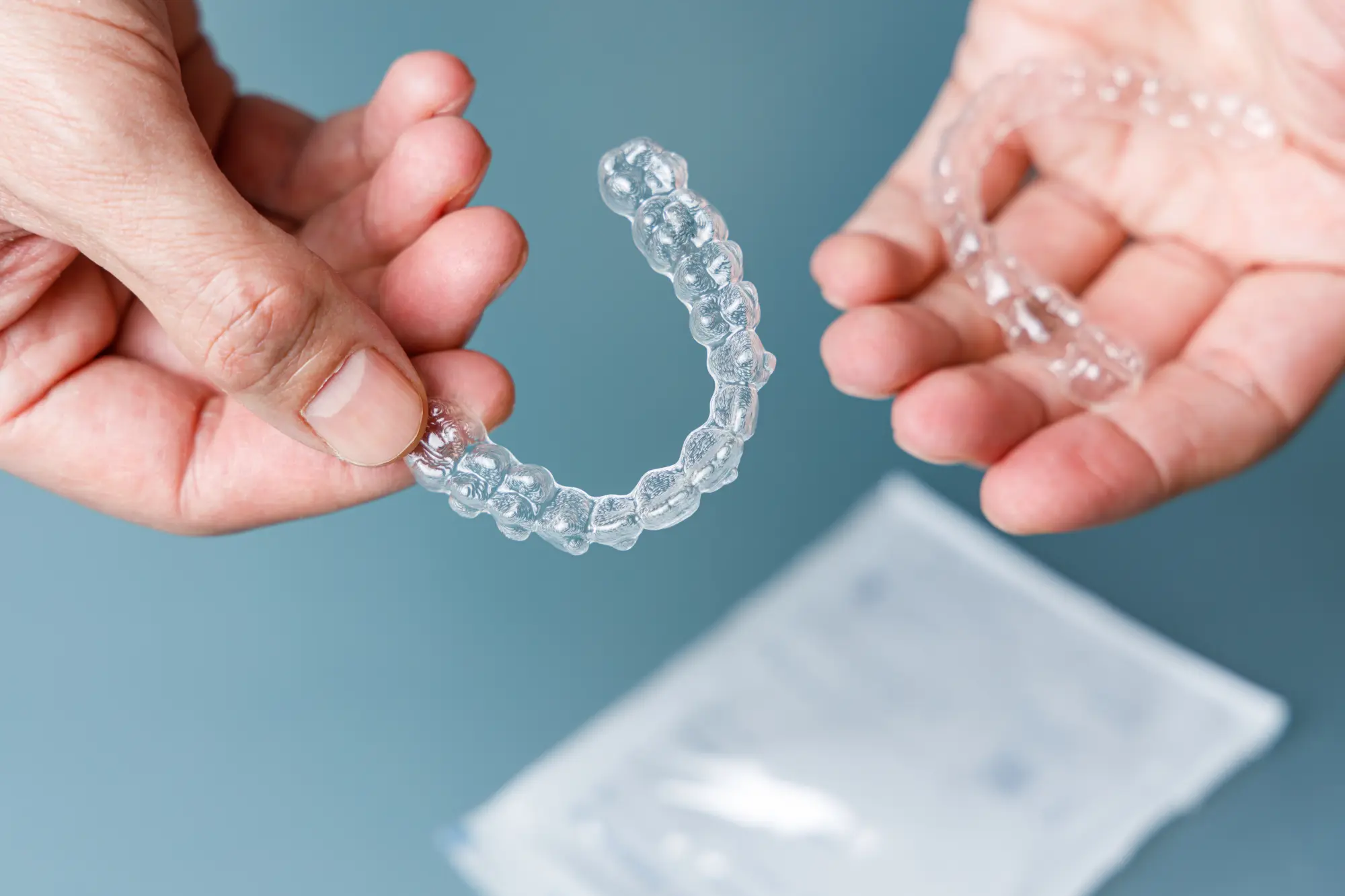
Invisalign uses a series of custom-designed, clear aligners made from advanced biocompatible materials to gradually shift teeth into their ideal positions. Patients often find Invisalign appealing due to its discreet design and removable trays, enabling better oral hygiene and flexibility in food choices. But is it faster? The short answer is “yes.”
For many mild to moderate misalignment cases, Invisalign tends to work more quickly than traditional braces. Cases of mild crowding or spacing may be completed within 6-18 months. However, more complex cases may take closer to 12-24 months, putting its timeline on par with traditional braces.
Traditional braces use a combination of brackets, wires, and elastics to exert consistent pressure on the teeth over time. While they are more visible than Invisalign, braces are versatile and capable of correcting a wide range of dental issues, including severe misalignments, bite problems, and rotation.
For complex orthodontic cases, braces may sometimes have the upper hand in speed because they allow for greater precision and control, particularly when addressing issues like significant crowding or gaps.
Braces can also be used alongside other orthodontic devices and even surgical treatments for complicated smile and bite alignment issues. An average treatment timeline for braces ranges from 18 to 24 months but can take up to three years, depending on the severity of the case and patient compliance.
So, is Invisalign faster than traditional braces? For many adults with mild to moderate alignment concerns, Invisalign can deliver comparable or faster results than braces when worn consistently for the recommended 20-22 hours per day.
However, traditional braces may prove more efficient for complex or severe misalignments. The best choice ultimately depends on your specific dental needs, personal preferences, and how committed you are to adhering to treatment guidelines.
At Smile With Style, we’re here to help you make the right decision. Whether you’re a good candidate for Invisalign or traditional braces are better for your needs, you can trust that Dr. Larson and Dr. Hedrick will tailor your treatment plan with precision, working toward your goals while keeping your comfort at the forefront.
When you choose Smile With Style in Fullerton, CA, you're selecting a practice that prioritizes:
Dr. Larson and Dr. Hedrick take the time to truly listen to your concerns, customizing every detail of your care to meet your unique needs. Whether you're anxious about treatment or simply want clear, convenient guidance, we’re here for you every step of the way.
If you're ready to learn more about Invisalign or traditional braces, Smile With Style is here to help. Call us at (714) 870-9445 to schedule your consultation today. Your brighter, healthier smile is closer than you think, starting with a practice that puts your comfort, care, and confidence first.